Replacing Your Boundary Wire Robot Mower with a Wire-Free Model: The Transition Guide
By Le Coin Vert
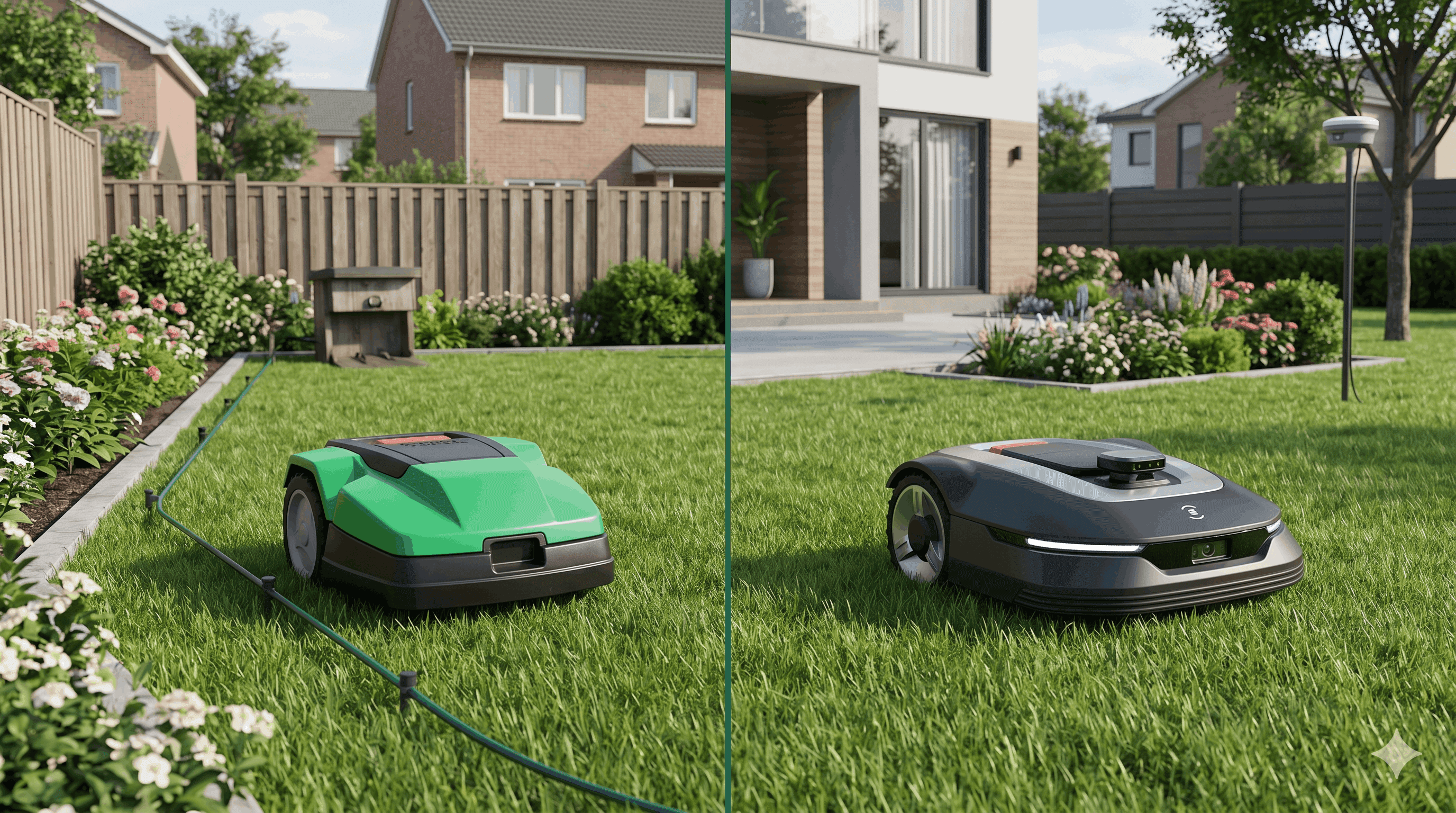
The wire-free robot mower market started presenting a genuine alternative to perimeter-wire models around 2022. By 2026, the capability gap has closed enough that most gardens that once required a wire can be served by an RTK or LiDAR model. The question is no longer whether the technology works. It is whether the transition is worth it, and how to do it without recreating the operational problems you are replacing.
What the Wire Actually Costs You
The industry's pitch for perimeter-wire robots was always about the mowing itself. Quiet, automatic, no pushing. What the sales material did not cover was the ongoing maintenance cost of the wire boundary.
A perimeter wire buried 5 cm below the surface in a typical residential lawn takes two to four hours to install and costs between £100 and £200 in materials. That is a sunk cost most owners accept once. What they do not expect is the recurring cost. A lawnmower blade, an aerating fork, a garden fork pushed slightly too deep when dividing perennials, a child running a skateboard across the lawn. Any of these can break the wire. Each break means locating the fault (which can take 30 to 90 minutes with a wire detector), digging, splicing, burying, and testing. If the break is in a complex section near an island zone, plan for a full afternoon.
The average perimeter-wire robot owner reports between one and three wire breaks per year in regular use. Over a five-year ownership period, that accumulates to a significant investment of time that does not appear in the initial cost-of-ownership calculations. The true transition cost to wire-free is not just the price of the new robot. It is also the recovery of time you were spending on wire maintenance.
Ready to go wire-free?
Our simulator finds the right model for your garden in under 2 minutes.
The Three Pre-Transition Checks
Before committing to a specific wire-free model, three checks determine which technology will work in your garden.
Sky coverage: Stand in the centre of your lawn with a compass app open and note the approximate angle of unobstructed sky view. If walls, trees, or structures block more than roughly 40% of the sky, RTK GPS will be unreliable and you need a LiDAR or Vision model instead.
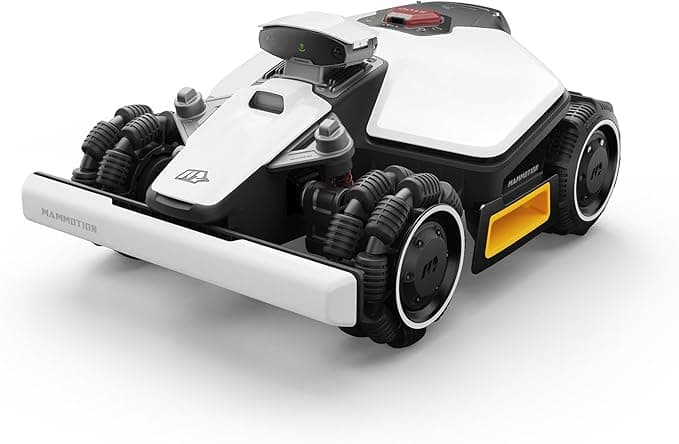
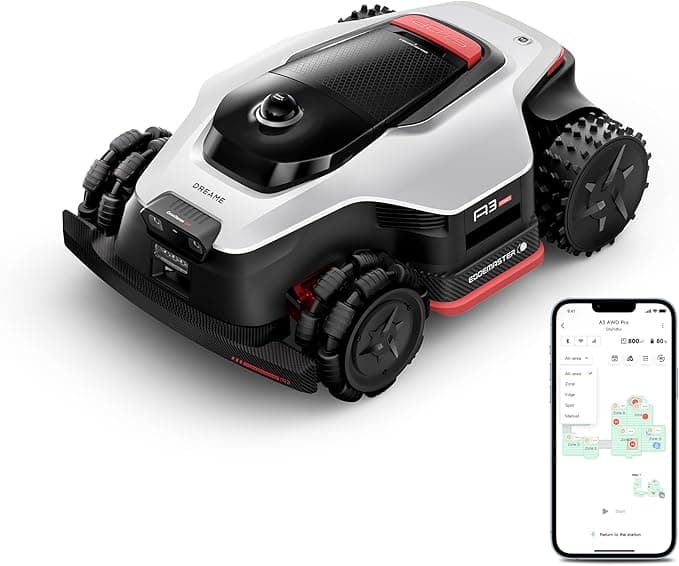
Slope gradient: Measure your steepest slope. A standard inclinometer app on a smartphone is accurate enough. Most RTK models handle slopes up to 35%. Above that, you need an AWD model. The Mammotion Luba 2 AWD 5000 and Dreame A3 AWD Pro handle slopes up to 45-50%.
Minimum contiguous grass area: Measure the actual grass area, not the total garden size. A 300 m² garden with 50 m² of paving, a terrace, and a pond might have only 150 m² of grass. Wire-free robots need a minimum of around 100 m² of contiguous grass to operate effectively.
The Transition Process: What to Do with the Old Wire
The existing perimeter wire does not need to be removed before a wire-free robot arrives. Leave it in place. The new robot will ignore it entirely. Removal is optional and depends on whether you want to aerate or reseed that season, which would be more convenient without wire in the ground.
The existing docking station is brand-specific and non-transferable. It will need to be uninstalled and replaced with the new robot's charging station. Most wire-free docking stations require a 2 m clear run of lawn in front of the approach path and a power socket within 10 m. Installation takes under an hour.
The initial mapping session for a wire-free robot takes between one and three sessions to complete depending on garden complexity. The first session is typically manual-guided or low-speed autonomous to build the perimeter map. Do not interrupt it. A partial map produces systematically poor mowing results until it is rebuilt.
Step-by-step guide
- 1
Step 1: Measure sky coverage and slope
Stand in the centre of your lawn, open a compass or sky-view app, and note how much of the sky is blocked by walls, trees, or structures. Also measure your steepest slope with an inclinometer app. These two values determine which navigation technology is viable.
- 2
Step 2: Choose your navigation technology
Open sky with slope under 35%: RTK models work. Enclosed garden or limited sky coverage: choose LiDAR. Garden with frequent dynamic obstacles (pets, children): choose Vision. Slope above 35%: require AWD regardless of navigation type.
- 3
Step 3: Install the new charging station
Place the new dock on level ground with a clear 2 m approach path. Connect to power. Do not remove the old perimeter wire yet — the new robot will ignore it, and removal is optional.
- 4
Step 4: Run the initial mapping session
Follow the manufacturer's mapping sequence. Allow the robot to complete each mapping pass without interruption. For complex gardens, a second mapping session may be needed to cover all zones. Resist the temptation to adjust boundaries mid-session.
- 5
Step 5: Verify coverage after the first week
After five to seven sessions, check the mowing pattern against the actual lawn boundary. Most wire-free robots refine their map over the first few sessions. Any systematic uncovered areas at this point indicate a configuration issue, not a hardware problem.
Best Wire-Free Upgrades in 2026
Best Wire-Free Upgrades 2026
 |  |  | |
|---|---|---|---|
| Max area | 1500 m² | 500 m² | 3500 m² |
| Max slope | 80% | 30% | 80% |
| Wire-free | |||
| GPS / RTK | |||
| Cut-to-Edge | |||
| App control | |||
| Check price | Check price | Check price |
The Mammotion Luba Mini AWD 1500 is the most direct replacement for a mid-range perimeter-wire robot in a typical suburban garden. LiDAR navigation, no GPS dependency, handles plots up to 1500 m², and the mapping quality is reliable enough for complex perimeter shapes.
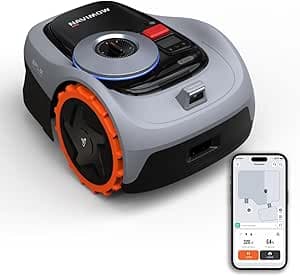
The Segway Navimow i105E fits smaller gardens (under 500 m²) where GNSS+VSLAM navigation works. Its compact form factor handles narrow corridors better than the Luba's wider body.
The Dreame A3 AWD Pro 3500 is the choice for sloped terrain with dynamic obstacles. It is heavier and more expensive, but its all-wheel-drive system and vision-based obstacle detection address the two failure modes most common in complex gardens.
Switching from Perimeter Wire to Wire-Free
Pros
- Eliminates ongoing wire break repair costs
- No perimeter installation required
- LiDAR and Vision handle enclosed gardens well
- AWD models available for steep terrain
Cons
- Higher upfront cost than perimeter-wire equivalents
- Initial mapping takes 1-3 sessions to complete
- RTK models still unreliable in enclosed spaces
- Existing dock must be replaced
Read also
.png&w=3840&q=75)
May 19, 2026
Small Urban Gardens: Which Wire-Free Robot Mower to Choose in 2026?
High walls, narrow paths, and a patio taking up half the garden. Urban lawns are the hardest terrain for robot mowers. Here is which navigation technology actually works when the sky is blocked.
.png&w=3840&q=75)
May 3, 2026
Winterising and Maintenance: 5 Steps to Double the Lifespan of Your Robot Mower
Most robot mower failures do not happen during the mowing season. They happen after a bad winter storage. Here is how to avoid the most costly mistakes.
Apr 28, 2026
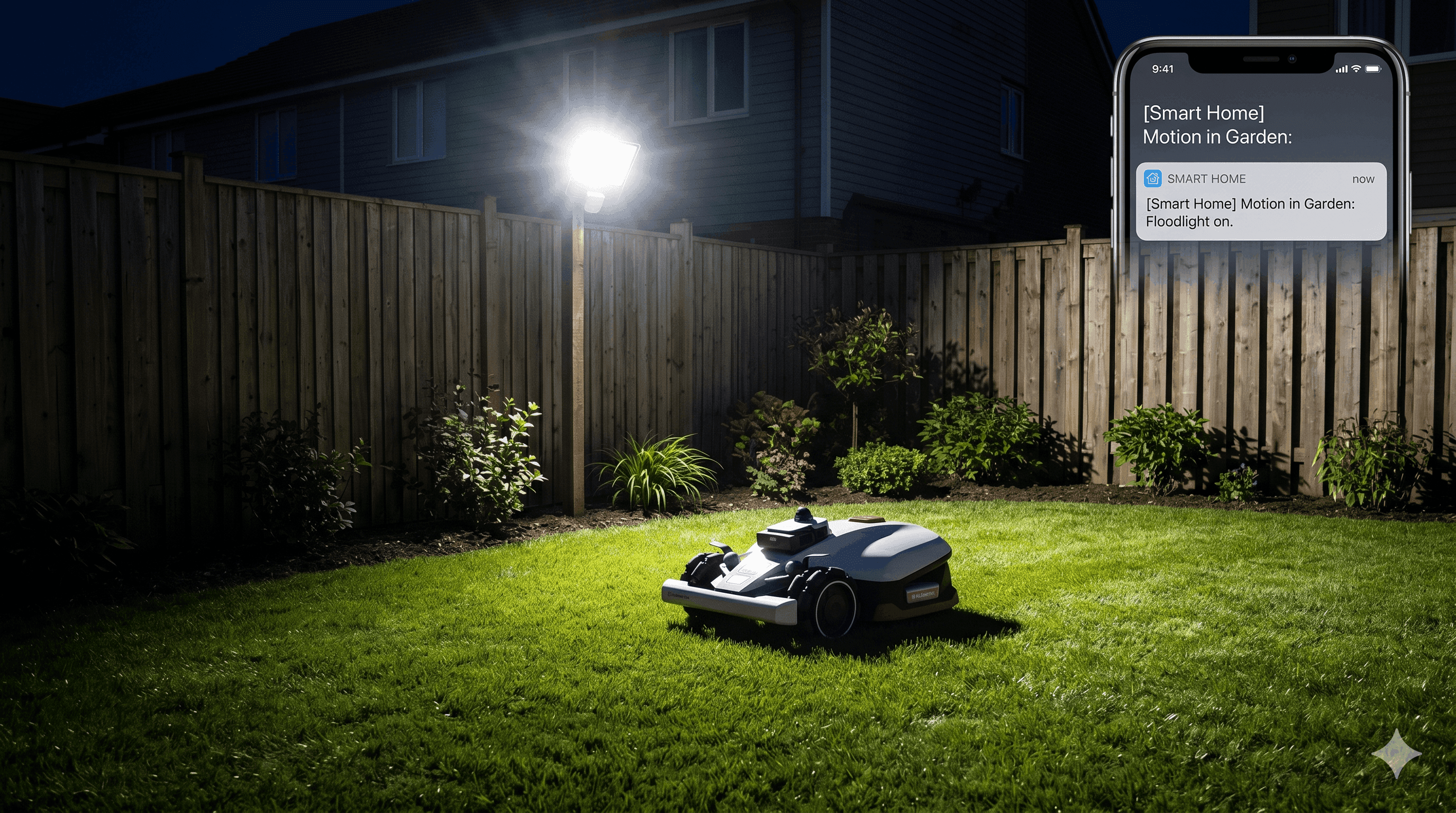
Anti-Theft and Security: How to Protect Your High-End Robot Lawn Mower
A stolen robot mower becomes a useless brick within minutes. Here is how the digital security layer works, what 4G tracking actually does, and what you can add to make theft genuinely pointless.