Winterising and Maintenance: 5 Steps to Double the Lifespan of Your Robot Mower
By Le Coin Vert
.png&w=3840&q=75)
The advertised lifespan of a robot mower is typically 8 to 12 years. The real lifespan of poorly winterised models is closer to 4 to 5 years. The gap comes almost entirely from the same mistakes repeated each autumn: battery stored at the wrong charge level, blades not replaced, moisture infiltrating the connectors, charging station left outside unprotected through the winter.
A correct winterisation protocol takes under two hours per year. What you save in spare parts, premature battery replacement, and extended operating life represents several hundred pounds over the full ownership period.
Step 1: End-of-Season Cleaning
Before storing the robot, a thorough clean of all contact zones is necessary. Wet grass accumulations under the chassis create moisture retention areas that corrode the blade mounting screws and weathering seals over the winter months.
Use a stiff-bristled brush to remove compacted debris from under the chassis, particularly around the blades and cutting deck. Low-pressure water is acceptable, but avoid pressure washers: they force water into seals and degrade electrical connectors.
The charging station connectors deserve specific attention. An electrical contact spray applied to the charging terminals prevents winter oxidation, which otherwise shows up as intermittent charging problems when restarting in spring.
Step 2: Blades — Do Not Wait Until Spring
The temptation is to replace blades in spring, at the start of the season. This is the wrong approach. Blunt blades stored over winter tend to rust slightly on their edges, which accelerates deterioration in storage and produces poor cuts during the first sessions back on a lawn restarting from dormancy.
Replace blades at the end of the season, before storage. You store a robot ready to run, and you avoid the first 3 to 5 hours of mowing with degraded blades on freshly awakened turf.
For gardens with small branches or tough-stemmed grasses, titanium blades last 2 to 3 times longer than standard steel blades while maintaining a better edge in difficult conditions. The additional cost is recovered from the second season onwards.
Step 3: The Battery — The Most Critical Point
Lithium-ion chemistry does not tolerate storage at full charge or at complete discharge. The ideal storage range is between 40% and 60% of total capacity.
Most manufacturers provide a storage mode accessible through the app that automatically brings the battery to the optimal level. On models without a dedicated storage mode, end the last session of the season normally, allow the robot to charge partially to around 50%, then put it away.
Storing a battery at 100% charge for 4 to 5 winter months degrades capacity irreversibly. The typical loss after a poorly stored winter is 10 to 15% of nominal capacity, which translates directly into shorter sessions from the first year afterwards and accelerated ageing over subsequent winters.
Is your robot well configured to last?
Our simulator helps you optimise your setup for the long term.
Step 4: Protecting the Charging Station
The charging station is often left outside year-round. For models with a standard plastic station, prolonged winter exposure (repeated freeze-thaw cycles, persistent moisture) degrades the connectors and can crack the housing after 2 to 3 winters without protection.
A model-specific winter cover protects the station for under £30. Some models (Husqvarna, Gardena) offer wall-mount kits that allow the station to be brought into a garage or outbuilding for storage, as well as protecting it from summer UV.
If your station is staked to the ground, remove it for winter. Mark the exact position with a stake or ground marker for precise repositioning in spring: the station must be replaced in the same orientation for the robot's return-to-dock logic to function correctly.
Step 5: Spring Restart
In spring, before launching the first session, verify that the navigation map is still valid. If garden work has changed the perimeter, or if obstacles have been added or removed over the winter, run a partial remapping session before resuming full operation.
On Vision robots, check the cameras: a film of condensation or dust on the lens degrades obstacle detection quality. A dry microfibre cloth is sufficient to clean the optics.
The first mow of the season should be done on dry grass, with freshly installed blades, and at a cutting height slightly higher than normal to avoid stressing turf that is restarting from dormancy.
Winter Maintenance: What Actually Changes
Pros
- Correctly stored battery: lifespan extended by 2-3 years
- Blades replaced in autumn: clean season restart
- Station protected: reliable connectors after 5 winters
- Connector spray: zero charging issues in spring
Cons
- No protocol: battery degraded from the second season
- Blunt blades in storage: accelerated rust over winter
- Station unprotected outdoors: cracking and oxidation
- No map check: erratic first sessions in spring
Frequently Asked Questions
At what charge level should I store a robot mower battery?
Should I bring the charging station inside for winter?
When should I replace robot mower blades?
Read also
.png&w=3840&q=75)
May 19, 2026
Small Urban Gardens: Which Wire-Free Robot Mower to Choose in 2026?
High walls, narrow paths, and a patio taking up half the garden. Urban lawns are the hardest terrain for robot mowers. Here is which navigation technology actually works when the sky is blocked.
May 5, 2026
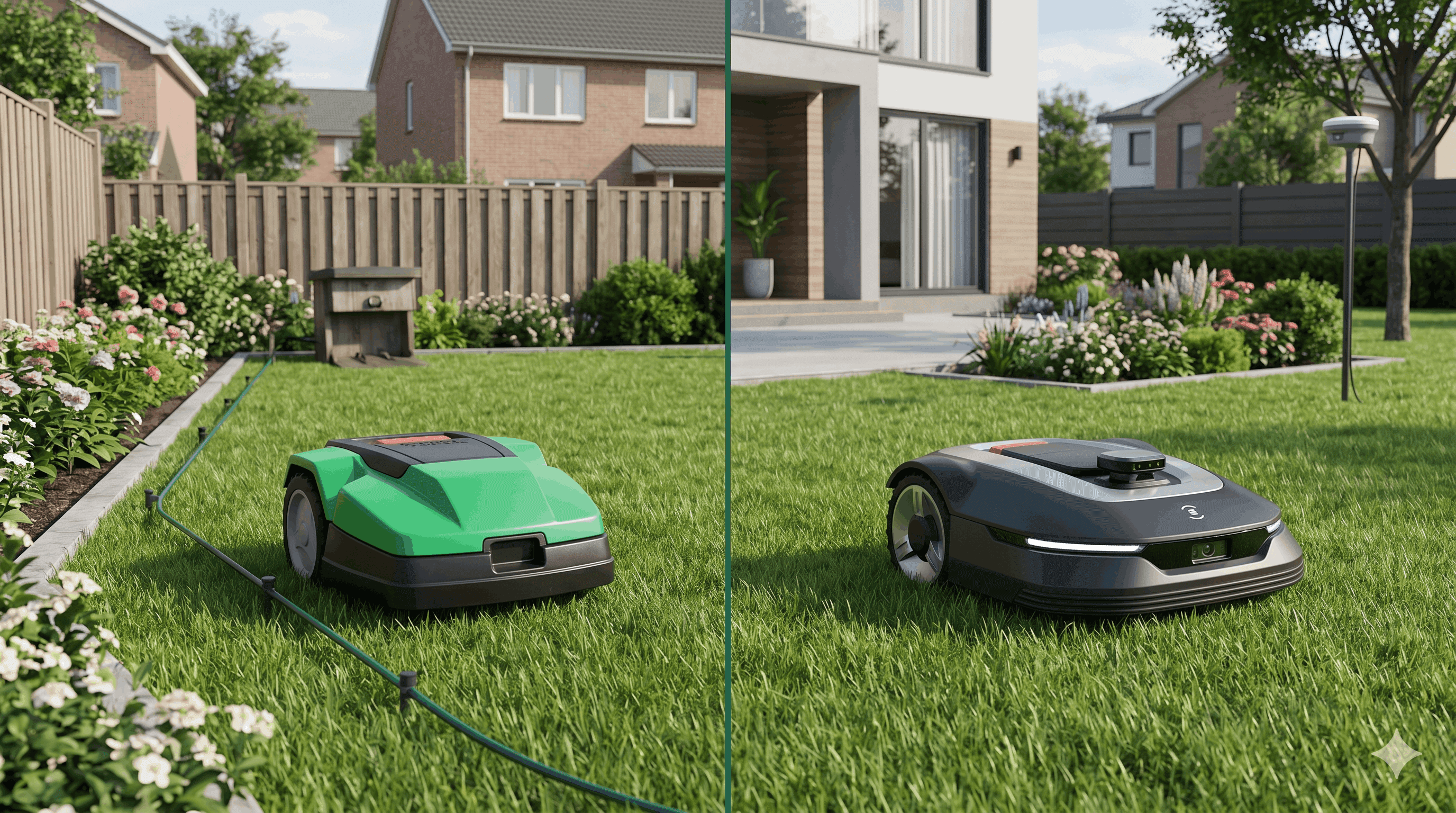
Replacing Your Boundary Wire Robot Mower with a Wire-Free Model: The Transition Guide
The installation took a full weekend and cost 200 euros. Three years later you have repaired the wire four times. Here is how to move to a wire-free model without repeating the same headache.
Apr 28, 2026
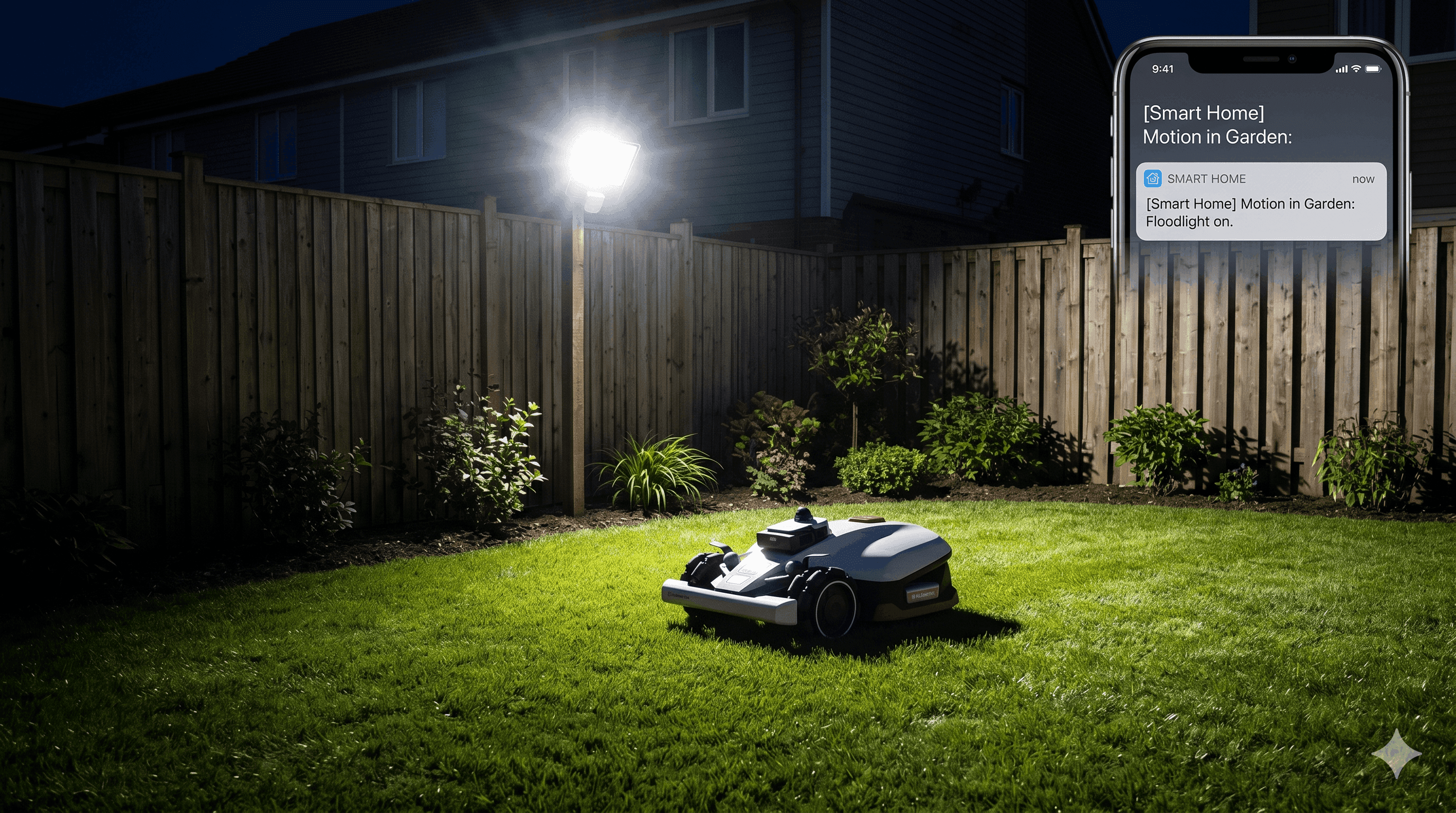
Anti-Theft and Security: How to Protect Your High-End Robot Lawn Mower
A stolen robot mower becomes a useless brick within minutes. Here is how the digital security layer works, what 4G tracking actually does, and what you can add to make theft genuinely pointless.