Smart Watering and Weather Data: How to Build a 100% Autonomous System
By Le Coin Vert
.png&w=3840&q=75)
Most "smart" irrigation systems stop at a basic rain sensor. They skip a scheduled watering when it rains. That is useful, but it is not autonomy. True garden automation means soil moisture decides when water runs, weather forecasts decide how much, and the robot mower is back in its dock before the first sprinkler head opens. Getting to that level requires three integrated systems working in sequence.
The Ecosystem Lock-In Problem
Before choosing hardware, the most important question is not which sensor is most accurate. It is which platforms talk to each other. The garden tech market in 2026 has largely consolidated around two integration approaches: cloud-to-cloud via IFTTT or proprietary cross-device APIs, and local automation via Home Assistant or similar platforms.
The trap that expensive smart gardens fall into is mixing incompatible ecosystems. A Husqvarna robot mower on the Automower Connect platform, a Gardena irrigation controller on the Gardena Smart System, and a Netatmo weather station on its own app. Each device works brilliantly in isolation. None of them know the others exist, so the robot is still mowing when the sprinklers activate, the irrigation schedule never adjusts to actual soil data, and you are checking three different apps to understand what your garden is doing.
Avoiding ecosystem lock-in means choosing one integration layer and buying hardware that connects to it.
The Data Layer: What You Actually Need to Sense
A fully autonomous irrigation system needs three data inputs. Soil moisture, because that is the actual variable that determines whether plants need water. Weather forecast, because watering before 20mm of rain is scheduled tomorrow wastes water and can cause disease. Evapotranspiration rate, because a hot dry wind on a 28-degree day removes far more water from soil than a still 22-degree day does.
Professional irrigation systems compute ET0 (reference evapotranspiration) from temperature, humidity, wind speed, and solar radiation data. Home systems can approximate this with a weather station and a soil sensor. The Netatmo Weather Station measures all relevant atmospheric variables and exposes them via API. Combined with a capacitive soil sensor in the root zone (typically 10-15 cm depth for turf), you have everything needed to calculate a real watering decision.
The reference weather station for garden automation API integration
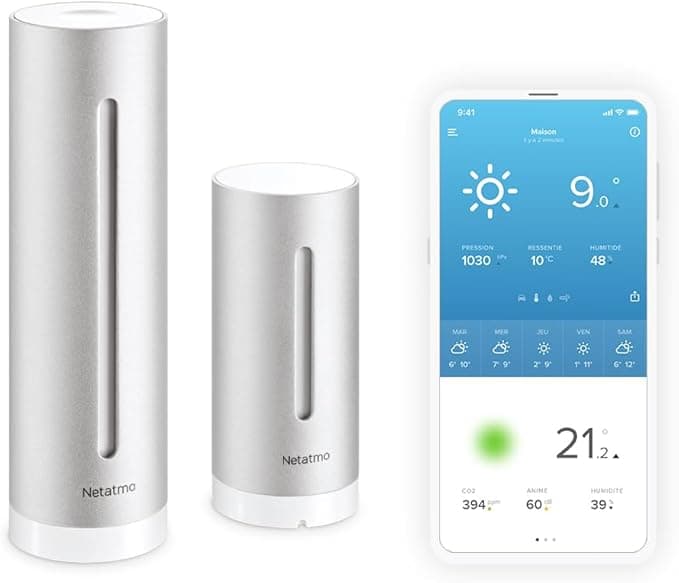
Netatmo Smart Weather Station
Netatmo Smart Weather Station...
- Measures indoor air quality (CO2)
- clean app with excellent data history, aluminum design.
- Outdoor module must not be exposed to direct rain or sunlight (skews temperatures), no display on the station itself.
Affiliate link. Same price for you.
Linking the Robot Mower to the Irrigation Controller
The operational dependency between robot mowing and irrigation is underappreciated. A robot mower on wet grass loses traction on slopes, leaves wheel ruts on soft ground, and accumulates grass clippings on its blades twice as fast. Irrigation on recently mowed grass, where blades are freshly cut and the plant is temporarily stressed, increases disease pressure.
The correct sequence is: mowing session completes and robot docks, then irrigation runs, then enough time passes for the lawn surface to dry before the next mowing session is scheduled.
In a Home Assistant setup, this becomes an automation: when the mowing device tracker shows "docked" and the soil sensor shows moisture below threshold and no rain is forecast in the next six hours, trigger the irrigation zone with a calculated duration based on ET0 data. The robot's next session is then scheduled for at least two hours after the irrigation run ends.
Husqvarna's Automower Connect and Gardena's Smart System both have official Home Assistant integrations, which makes this automation straightforward to configure. Mammotion's LUBA platform also exposes an API that allows external scheduling commands.
Which mower fits your smart garden setup?
Our tool matches robots to your integration platform and garden size.
Weather API Integration: Beyond Simple Rain Skip
The next level above a local rain sensor is integrating a real weather API. Open-Meteo is a free, open-source weather API with one-hour forecast granularity, a 7-day horizon, and no authentication required. It returns precipitation probability, accumulated rain, temperature, wind speed, and ET0-related variables in a single API call.
An automation that queries Open-Meteo at 06:00 each day, calculates the day's estimated ET0, compares it to yesterday's rainfall plus current soil moisture, and decides watering duration accordingly runs completely without human input. Over a full summer season, this approach typically reduces irrigation by 30-40% compared to a fixed-schedule system, while maintaining better soil moisture consistency.
For gardens running Home Assistant, the Open-Meteo integration is a community add-on. For standalone irrigation controllers like Rachio or RainBird, most premium models now include API-based weather skipping natively.
The Build Order
The practical order for building this system is: start with the soil sensor and a manual irrigation controller, observe the soil moisture patterns for two to three weeks before adding automation, then layer in the weather integration, and finally connect the robot mower scheduling. Attempting to configure all three components simultaneously produces a system that is difficult to debug when something does not behave as expected.
The total investment for a complete setup covering a 200 m² garden runs between £800 and £1500 depending on the number of irrigation zones and the robot mower chosen. The payback is primarily in time: a fully automated garden system removes roughly 80% of the recurring manual tasks across mowing, watering, and lawn monitoring.
Fully Autonomous Garden Irrigation System
Pros
- 30-40% reduction in water usage vs fixed schedule
- Robot mower and irrigation coordination prevents wet-grass mowing
- No ecosystem conflict when planned from the start
- Open-source weather APIs available at zero cost
Cons
- Ecosystem compatibility must be verified before purchase
- Initial setup requires technical configuration
- Multi-zone gardens increase component cost significantly
- Local soil sensors need re-calibration annually
Frequently Asked Questions
Do robot mowers and smart irrigation systems work together automatically?
What is the minimum sensor setup for smart irrigation?
Can I use any robot mower with Home Assistant?
Read also
.png&w=3840&q=75)
May 19, 2026
Small Urban Gardens: Which Wire-Free Robot Mower to Choose in 2026?
High walls, narrow paths, and a patio taking up half the garden. Urban lawns are the hardest terrain for robot mowers. Here is which navigation technology actually works when the sky is blocked.
.png&w=3840&q=75)
May 10, 2026
Nighttime Smart Home Scenarios: Linking Mowing, Lighting and Weather
Your robot starts at 11 PM because rain is forecast tomorrow. The garden lights activate at sunset and cut off when it docks. This level of automation works today with Home Assistant.
May 5, 2026
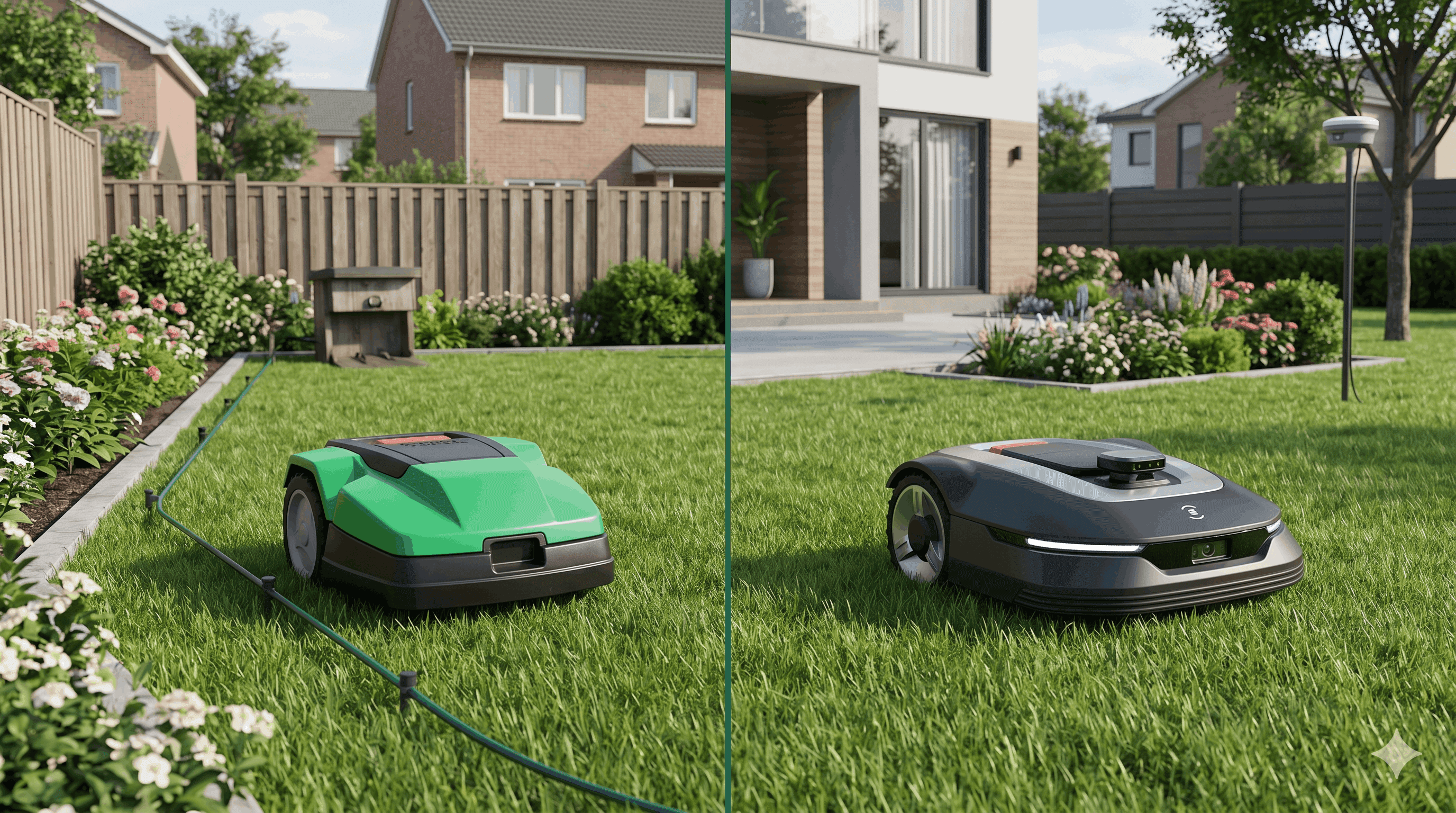
Replacing Your Boundary Wire Robot Mower with a Wire-Free Model: The Transition Guide
The installation took a full weekend and cost 200 euros. Three years later you have repaired the wire four times. Here is how to move to a wire-free model without repeating the same headache.