Garden Home Automation 2026: How to Synchronize Your Smart Watering and Robot Mower?
By Le Coin Vert
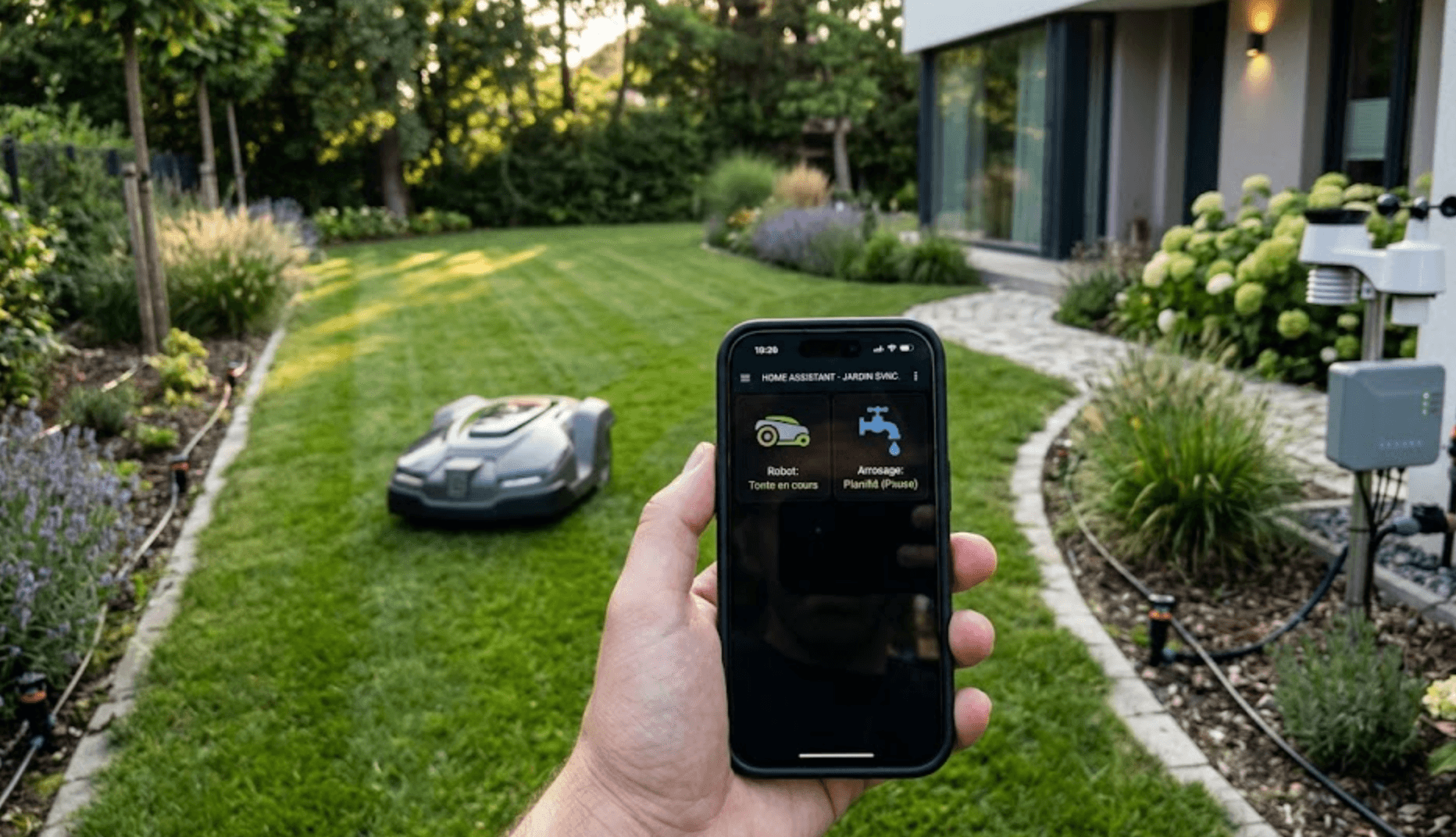
If you already own a robot mower, you know the pleasure of an always impeccable lawn without the slightest effort. But what happens when this technological gem crosses paths with your freshly triggered automatic watering system?
It's the classic nightmare of poorly configured garden home automation: your robot worth several thousand dollars finds itself sprayed at high pressure, or worse, its blades decapitate a poorly retracted pop-up sprinkler. Beyond material damage, mowing soaking wet grass is an agronomic heresy: it promotes soil compaction, mushroom proliferation, and dramatically clogs your machine's housing.
At Le Coin Vert, we believe that in 2026, a truly "smart" garden isn't just about isolated connected devices: they must communicate with each other. Today, we dive into the guts of outdoor home automation to show you how to create a perfect synergy between your water valves, your weather sensors, and your robot mower.
1. Watering Controllers: The muscle of your installation
The first step for a communicating ecosystem is to replace your old battery-powered timer with a connected watering valve. Two schools are currently competing on the market, each responding to different network architectures.
The proprietary ecosystem approach: Gardena
If you already own a robot of the brand (or from the Husqvarna galaxy), the Gardena Smart Water Control is a no-brainer. It integrates natively into the Gardena Smart System app, allowing you to automatically prevent watering when the robot is mowing, without having to code anything. Its 868 MHz radio protocol offers exceptional range, ideal for very large terrains where Wi-Fi no longer passes.
The standardized and futuristic approach: Eve Aqua
For connected home purists (notably under Apple HomeKit or via the universal Matter protocol), the Eve Aqua is the absolute reference. Its huge asset? It integrates Thread network technology. No more capricious connection bridges: each mains-powered Thread device extends the network. The more equipment you add, the more robust your valve's connection at the bottom of the garden becomes.
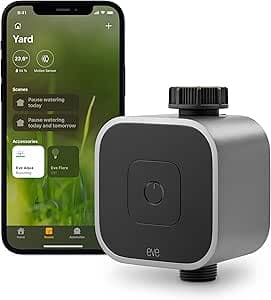
Eve Aqua (3rd Gen)
Smart water controller (3rd Gen)...
- Apple HomeKit and Matter/Thread compatible, precise water consumption tracking, sturdy aluminum design.
- Requires Apple ecosystem or a Thread border router for remote control, runs on (AA) batteries.
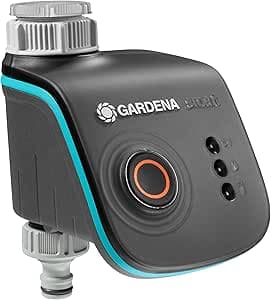
Gardena Smart Water Control
The robust programmer...
- Syncs intelligently with Gardena robotic mowers, frost warnings, highly flexible scheduling via the app.
- Strictly requires the "Gardena Smart Gateway" (often sold separately or in kits).
2. Weather Sensors and Soil Probes: The brain of the operation
A home automation watering scheduled every Tuesday and Thursday evening isn't "smart," it's just a glorified timer. To save water (an increasingly precious commodity) and optimize your lawn's health, your system must react to the environment.
This is where weather stations and soil probes come in.
The Netatmo Weather Station coupled with its rain gauge allows you to suspend watering cycles if a sufficient shower has just hit your home.
For the most fastidious gardeners, the Ecowitt GW1100 gateway represents the Holy Grail of green home automation. It allows you to report data from dozens of extremely precise soil moisture probes directly into your central system. Watering only triggers if the moisture level at 10 cm depth drops below a critical threshold.
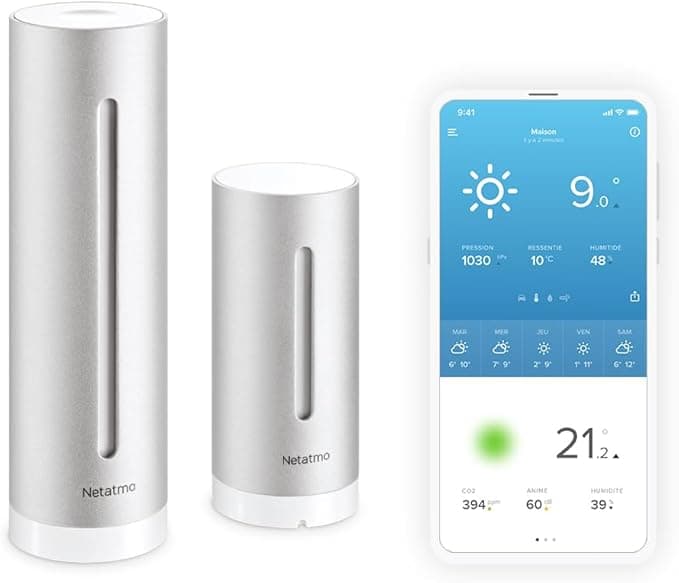
Netatmo Smart Weather Station
Netatmo Smart Weather Station...
- Measures indoor air quality (CO2)
- clean app with excellent data history, aluminum design.
- Outdoor module must not be exposed to direct rain or sunlight (skews temperatures), no display on the station itself.
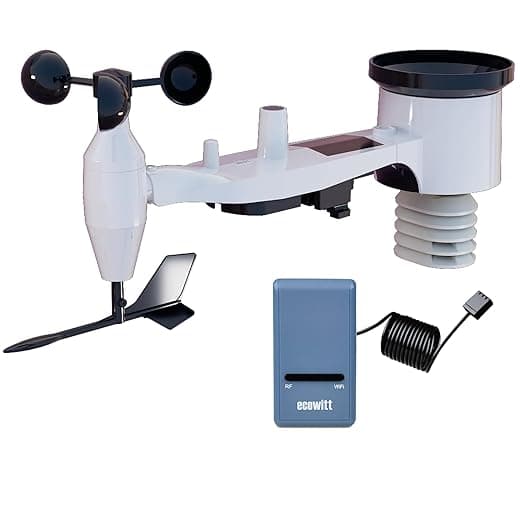
Ecowitt GW1100 Wi-Fi Gateway
Ecowitt GW1100 Wi-Fi Gateway...
- Very budget-friendly solution, expandable with many sensors (soil moisture, rain gauges), easy access to local data.
- Web administration interface is a bit technical, basic plastic design.
Sensor-driven watering (Netatmo + Ecowitt)
Pros
- Massive water savings (up to 50% according to studies)
- Prevention of lawn diseases related to over-watering
- Automatic adjustment to heatwaves or rainy periods
Cons
- Requires initial calibration of probes according to soil type
- Strategic placement of sensors indispensable to avoid weather shadow zones
3. The Ultimate Integration: Making everything talk with Home Assistant
If you're not using a closed ecosystem, you need a conductor. Home Assistant (HA) is the most powerful open-source home automation platform to achieve this. It will bridge the gap between your robot mower's API (for example, the Worx Landroid Vision M600), your Ecowitt probes, and your Eve Aqua valve.
The absolute safety scenario
The goal is to write a rule (an "automation") that dictates the following behavior: if watering starts, then the robot must immediately return to its base and stay there until the water cycle is finished.
Here is an example of a classic YAML script to integrate into your Home Assistant interface to secure your installation:
unknown node⚠️ Beware of return delay: A robot mower can take between 3 and 10 minutes to find its base. Always plan a delay in your watering script to allow the robot time to take shelter before the sprinklers sprout from the ground.
4. The icing on the cake: Synchronized outdoor lighting
Since we are in advanced optimization, let's address the aesthetic and safety aspect. Once the sun has set and the robot is safely back on its charging station, why not highlight your freshly cut lawn?
By integrating a Shelly Plus 1 Wi-Fi/Bluetooth micro-module behind your outdoor lighting switches, you can create magnificent nocturnal scenarios. Even better, this small module can act as a signal repeater in your waterproof boxes, strengthening your garden's Wi-Fi coverage to ensure your robot mower always stays connected, even at the back of the plot.
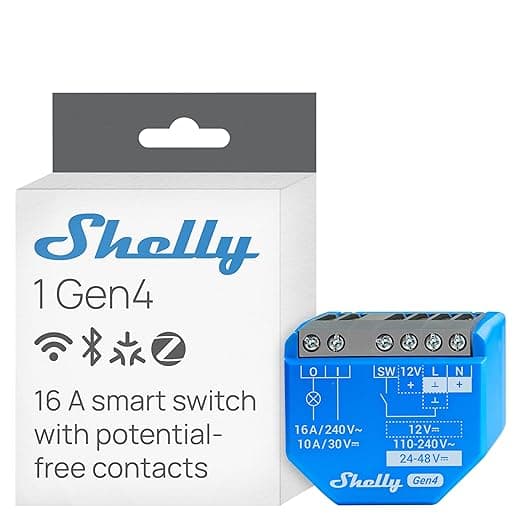
Shelly Plus 1
The Wi-Fi relay micromodule...
- Ultra-compact size fits behind switches, built-in Wi-Fi and Bluetooth, allows low-cost automation of outdoor lights or pumps.
- Requires handling electrical wiring (safety standards apply), initial setup can be complex for beginners.
In Conclusion
The border between gardening and home automation no longer exists. By connecting your systems, you don't just protect your material investments, you offer your lawn a clinically precise maintenance that even the best landscapers struggle to reproduce manually.
Taking the time to install a smart water controller and making it talk with your robot mower is the most profitable weekend project you can do this spring.
Have you already taken the plunge into automating your watering, or do you still fear the complexity of the installation? Share your experiences (and your possible water damage!) in the comments section below.
Design your garden's connected ecosystem
Our free diagnosis identifies devices compatible with your configuration and budget.
Read also
.png&w=3840&q=75)
May 10, 2026
Nighttime Smart Home Scenarios: Linking Mowing, Lighting and Weather
Your robot starts at 11 PM because rain is forecast tomorrow. The garden lights activate at sunset and cut off when it docks. This level of automation works today with Home Assistant.
Apr 6, 2026
Home Assistant Green Review: The Official Smart Home Hub
Discover our review of the Home Assistant Green. The official hub to start in smart home without technical skills. Installation, performance, and expert opinion.
.png&w=3840&q=75)
Apr 5, 2026
Improving Wi-Fi Coverage for a Flawless Connected Garden
Is your robot mower stopping in the middle of the yard? Discover our expert guide to diagnose and extend your garden's Wi-Fi range.