Expert Guide 2026: Wireless Robot Mowers, Smart Home, and Lawn Maintenance
By Le Coin Vert
.png&w=3840&q=75)
The year 2026 marks a revolution in the maintenance of green spaces. The convergence between second-generation autonomous robotics, open-source home automation ecosystems, and agronomic sciences allows for an unprecedented level of precision. Robot mowers are freeing themselves from wires thanks to laser telemetry and satellite positioning, while irrigation is no longer based on simple timers, but on the algorithmic calculation of local evapotranspiration.
This expert report dissects current hardware solutions, details their technical integration via Home Assistant, and highlights the importance of adapting these technologies to pedoclimatic realitieswith a focus on complex soils.
1. The Autonomous Navigation Revolution
The disappearance of the boundary wire addresses the number one user frustration: breaks caused by rodents, frost, or gardening work. In 2026, the industry relies on three technological pillars, increasingly merged into so-called "hybrid" systems.
Real-Time Kinematic Positioning (GPS RTK)
RTK technology transcends traditional GPS via a local base station that corrects ionospheric errors, offering centimeter precision (about 2 cm). This accuracy allows for systematic mowing in parallel strips (U-cut), reducing operating time and mechanical wear.
However, pure RTK suffers in dense environments. The satellite signal is vulnerable to the multipath phenomenon caused by high walls and the shadow zones of thick canopies. That's why manufacturers are now integrating odometry modules and vSLAM algorithms to maintain heading during temporary signal losses.
Laser Telemetry (3D LiDAR) and Spatial Vision
For heavily wooded gardens, LiDAR generates a 3D point cloud of the environment, completely independent of a clear view of the sky. Systems like OmniSense ensure sub-millimeter obstacle detectionup to 10 mmprotecting equipment forgotten on the lawn and small nocturnal wildlife.
Visual artificial intelligence (AI cameras + neural processors) completes this picture. The limits of pure vision (sun glare, night work) are mitigated by the addition of infrared spectra or by fusion with LiDAR.
2. Comparative Analysis: Major Players 2026
The selection of a robot must cross topography, surface area, and desired degree of autonomy.
2026 Premium Wireless Robot Comparison
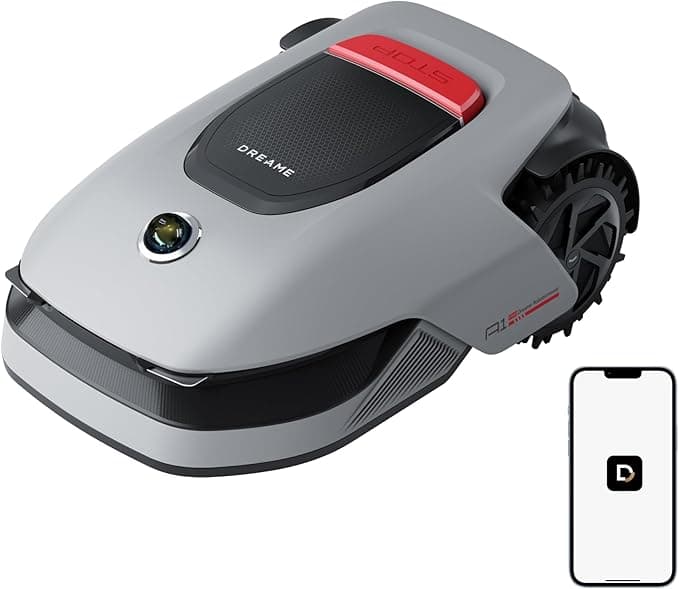 | 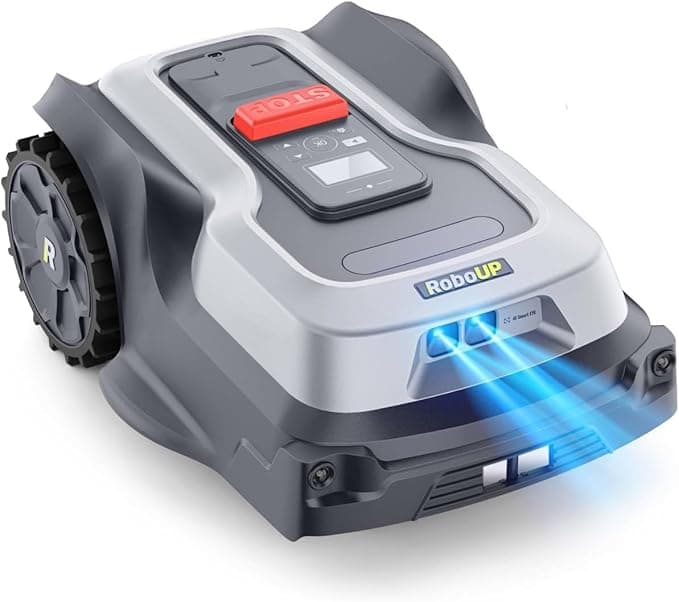 | 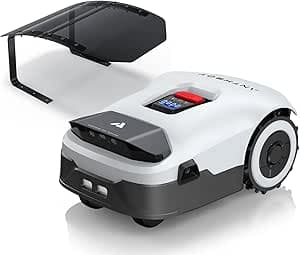 | 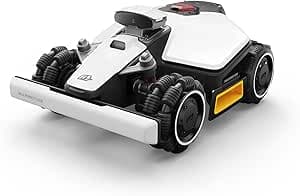 | |
|---|---|---|---|---|
| Max area | 2000 m² | 1200 m² | 2000 m² | 800 m² |
| Max slope | 45% | 45% | 45% | 80% |
| Wire-free | ||||
| GPS / RTK | ||||
| Cut-to-Edge | ||||
| App control | ||||
| Check price | Check price | Check price | Check price |
2026 Accessible and Wired Robot Comparison
 |  |  | |
|---|---|---|---|
| Max area | 500 m² | 600 m² | 1000 m² |
| Max slope | 30% | 30% | 40% |
| Wire-free | |||
| GPS / RTK | |||
| Cut-to-Edge | |||
| App control | |||
| Check price | Check price | Check price |
Premium Hybrid Models
The best choice for large complex gardens: OmniSense 3D LiDAR, ultra-fast mapping, millimeter obstacle detection.
Dreame A1 Pro LiDAR
Precise 3D LiDAR navigation...
- Ultra-precise OmniSense LiDAR navigation (works without GPS or light)
- fast 3D mapping
- sleek design.
- The top-mounted LiDAR dome is exposed to very low-hanging branches
- premium price tag.
Affiliate link. Same price for you.
The Dreame A1 Pro LiDAR (2000m²) dispenses with beacons and RTK antennas. Its OmniSense system maps the terrain in 3D in minutes. It includes rain detection that commands an automatic return to base, preventing the tearing of wet grass.
The RoboUP T1200 Pro (1200m²) combines RTK, vSLAM, and visual AI. At each mowing cycle, it changes its attack angle by 15 degrees, avoiding ruts and soil compaction. "Ride-on-Edge" technology exploits hard surfaces adjacent to the lawn to precisely mow the lawn edge.
The ANTHBOT Genie 1000 (1000m²) uses four cameras (HDR and infrared) coupled with an RTK antenna and an 8-core processor trained on over 100,000 simulationscapable of classifying 1000+ types of obstacles. Its real strength: Wi-Fi, Bluetooth, and integrated 4G, ensuring permanent control even without Wi-Fi coverage at the back of the terrain.
The Response to Extreme Slopes
The ultimate weapon against extreme slopes and slippery clay soils: AWD all-wheel drive up to 80% incline.
Mammotion LUBA Mini AWD 800
The compact off-roader...
- All-Wheel Drive (AWD) perfect for rough terrain
- handles slopes up to 80%
- aesthetic straight-line mowing.
- Bulky design
- the companion app can sometimes lack intuitiveness.
Affiliate link. Same price for you.
The Luba Mini AWD 800 (800m²) is the engineering answer to rugged terrain. Its AWD system allows it to face inclines reaching 80% (38°). Where a rear-wheel-drive robot slips and tears up wet turf, the Luba maintains perfect traction.
Solutions for Urban and Suburban Spaces
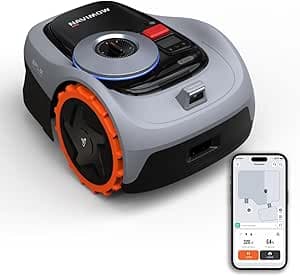
The Segway Navimow i105E (500m²) illustrates EFLSRTK assisted by vision at an aggressive price point. Particularly praised for its clear interface and mapping reliability.
The YUKA Mini Vision adds a multifunctional dimension with a leaf sweeping extension kit (Sweeper Kit), transforming the mower into an indispensable fall maintenance tool.
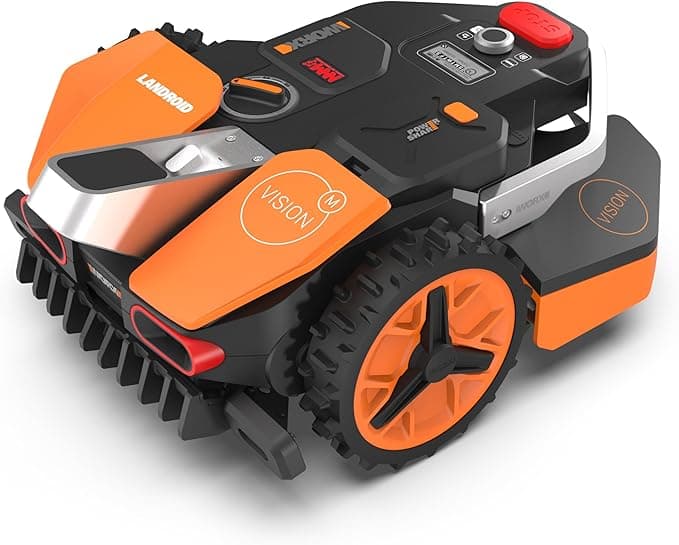
The Landroid Vision M600 operates in "Drop & Go": no installation, no beacons, no RTK. Pure deep neural network. Ideal for gardens with very marked physical boundaries (paths, beds).
Segway Navimow i105E
The affordable wireless revolution...
- Easy wire-free setup via app
- AI camera for obstacle avoidance
- +1 more
- Requires a relatively clear sky view for GPS (RTK) signal
- capacity limited to 500m² yards.
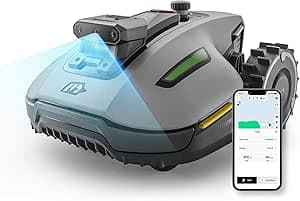
Mammotion YUKA Mini Vision
Pure visual intelligence...
- 100% visual navigation (no GPS needed)
- optional leaf sweeper attachment
- +1 more
- Navigation relies on lighting conditions (won't mow in pitch dark)
- newer technology requiring regular firmware updates.
Worx Landroid Vision M600 (WR205E)
The robot that sees...
- HDR camera and neural network (AI)
- zero installation or antennas required (just drop and mow)
- +1 more
- Random mowing pattern (no stripes)
- can struggle if lawn boundaries are not clearly defined physically.
The Continued Relevance of Wired Models
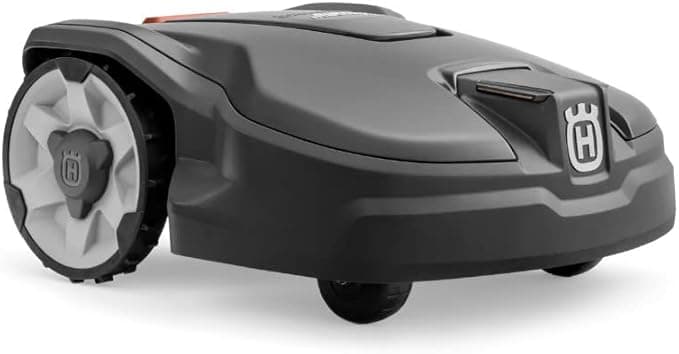
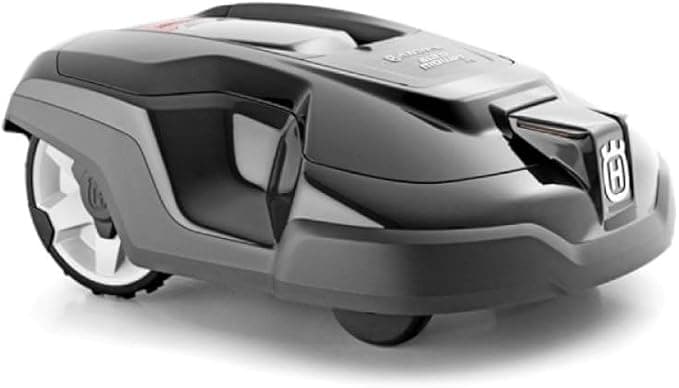
Enthusiasm for wireless should not obscure the reliability of boundary wire robots. The Automower 310 Mark II and 315 Mark II remain masterpieces of consistency. The exclusive Husqvarna guide wire ensures a return to base even in extremely narrow topographic corridors.
The Gardena Smart SILENO Life 750 integrates "Frost Guard" (frost sensor) which suspends activity when temperatures drop, preventing the breakage of frozen blades.
The Landroid M500 Plus and S300 maintain their relevance thanks to a unique modular ecosystem and an offset blade ("Cut to Edge") for flawless edges.
Husqvarna Automower 310 Mark II
Legendary Husqvarna reliability...
- Husqvarna cutting quality and reliability, spiral cutting mode, easy hose-down cleaning.
- Boundary wire is mandatory, high entry price.
Husqvarna Automower 315 Mark II
Increased capacity for 1500m²...
- Weather timer adjusts mowing to grass growth, frost sensor, excellent durability.
- Bluetooth connectivity (Connect@Home) has limited range, wired installation.
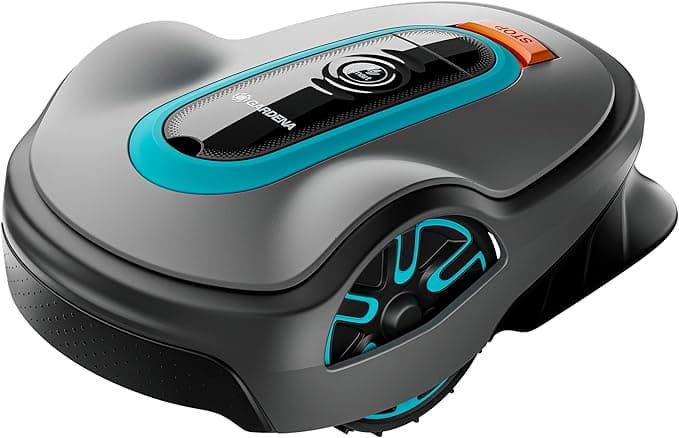
Gardena Smart SILENO Life 750
German excellence...
- Ultra-quiet operation (57 dB(A))
- easily navigates narrow passages (CorridorCut)
- +1 more
- Requires the installation of both a boundary wire AND a guide wire.
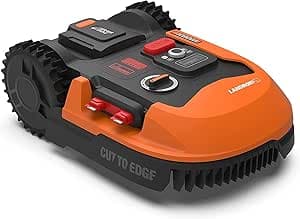
Worx Landroid M500 Plus (WR165E)
The famous modular robot...
- Cut to Edge technology (mows closer to borders), floating cutting deck, upgradable via plug-in modules.
- Wire installation required, add-on modules (anti-collision, etc.) increase the final cost.

Worx Landroid S300 (WR130E)
The smart choice for small gardens...
- Very compact, affordable, uses the universal Worx PowerShare 20V battery.
- Boundary wire installation required, no control display on the mower, strictly for very small yards.
3. Home Automation and Programming: Placing the Garden under Home Assistant
In 2026, the maintenance of green spaces is no longer a sum of isolated tasks, but a centralized process. Home Assistant (HA) unifies mowing, irrigation, and lighting via YAML automations.
Intelligent Mowing Management
Modern robots integrate natively with Home Assistant via the lawn_mower domain and the MQTT protocol. The user can send commands (start, pause, dock) and extract telemetry data to trigger avoidance scenarios.
The Architecture of Algorithmic Watering
The goal is a neutral water balance: calculate evapotranspiration and subtract natural precipitation. The "Smart Irrigation" integration in HACS accomplishes exactly this function.
The Eve Aqua Gen3 offers Matter over Thread compatibility, ensuring local responsiveness without cloud dependency. A specific configuration of the HomeKit bridge allows it to be integrated as a watering valve:
unknown nodeThe Netatmo Weather Station equipped with its rain gauge instantly transmits rain detection via Webhooks:
unknown nodeThe Ecowitt GW1100 gateway and its capacitive sensors provide a direct measurement of volumetric soil moisture. If the sensors detect a sufficient useful reserve in the deep layers (especially in clay soils), watering is postponedgenerating substantial water savings.
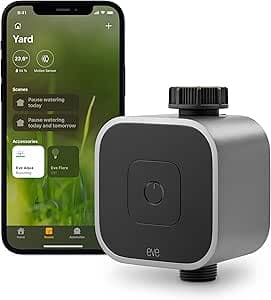
Eve Aqua (3rd Gen)
Smart water controller (3rd Gen)...
- Apple HomeKit and Matter/Thread compatible, precise water consumption tracking, sturdy aluminum design.
- Requires Apple ecosystem or a Thread border router for remote control, runs on (AA) batteries.
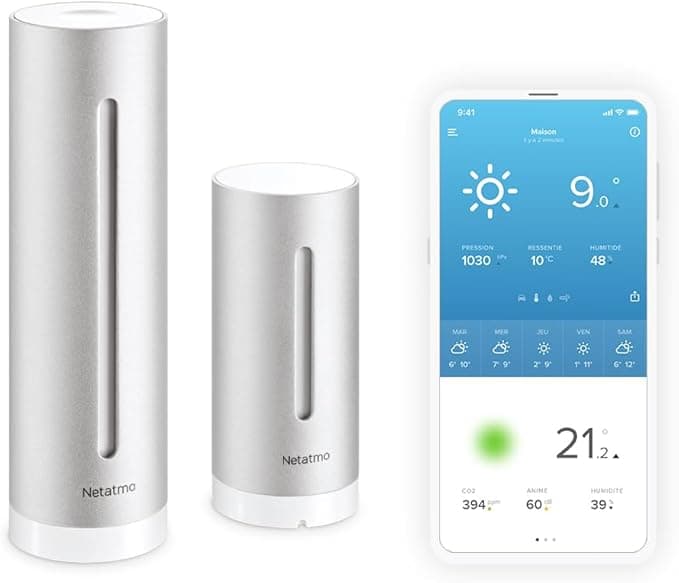
Netatmo Smart Weather Station
Netatmo Smart Weather Station...
- Measures indoor air quality (CO2)
- clean app with excellent data history, aluminum design.
- Outdoor module must not be exposed to direct rain or sunlight (skews temperatures), no display on the station itself.
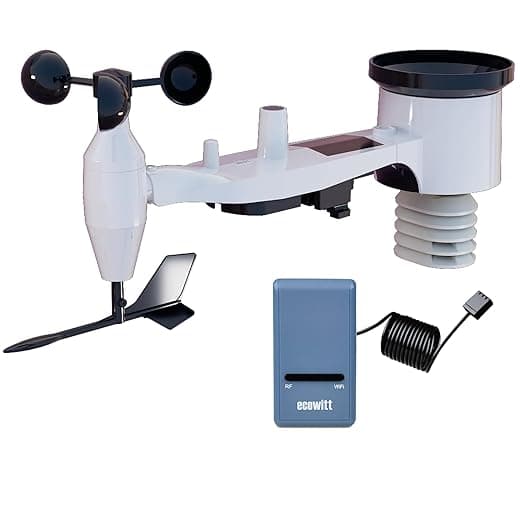
Ecowitt GW1100 Wi-Fi Gateway
Ecowitt GW1100 Wi-Fi Gateway...
- Very budget-friendly solution, expandable with many sensors (soil moisture, rain gauges), easy access to local data.
- Web administration interface is a bit technical, basic plastic design.

Shelly Plus 1
The Wi-Fi relay micromodule...
- Ultra-compact size fits behind switches, built-in Wi-Fi and Bluetooth, allows low-cost automation of outdoor lights or pumps.
- Requires handling electrical wiring (safety standards apply), initial setup can be complex for beginners.
Landscape Lighting Automation
The Shelly Plus 1 is a pillar of Home Assistant. Its support for key-value storage (KVS) and the execution of embedded JavaScript scripts allow for autonomous operation even in the event of a central server failure.
unknown node4. Agronomy and Field Intelligence: The Case Study of Continental Climate
Investment in cutting-edge home automation loses all meaning if it is disconnected from biological reality. Ample temperature ranges, heatwaves, and complex soils provide a demanding study ground.
The Trial of Clay Soils: Shrink-Swell
Clay is characterized by a very high water retention capacity, leading to a geotechnical shrink-swell phenomenon. In winter, the ground turns into a waterlogged and slippery surface.
Warning: On wet clay soil, a rear-wheel-drive robot will inevitably slip and plow the turf. Program Home Assistant to prohibit any mowing if the Netatmo station has recorded more than 10 mm of precipitation in the previous 12 hours.
In summer, the phenomenon reverses: the clay shrinks and creates deep desiccation cracks. Irrigation should consist of a slow and massive application (~25 L/m²) once a week to force capillary penetration. The cutting height should be set to maximum (60-70 mm): a taller lawn shades the soil and limits evaporation.
Phytosanitary Prevention
Lawn health bulletins regularly warn of major pathogens:
- Winter Fusarium (Microdochium nivale): develops during cold and wet periods, under snow.
- Red Thread (Laetisaria fuciformis): appears in spring or fall due to nutrient deficiency under high humidity.
Daily mowing by mulching returns organic nitrogen, but targeted mineral intake remains necessary. A fertilizer rich in Potassium (K) in fall acts as a natural antifreeze by densifying the cell walls of the grass. Phosphorus (P) stimulates essential root development before winter.
Scarification: The Indispensable Complementary Step
The perpetual mulching of robots, if not digested fast enough by microbial fauna (especially in cold clay soils), accumulates in "thatch" that suffocates roots and promotes moss.
Info: In a continental climate, two scarification windows are recommended: in spring (April-May) for rapid healing, or early fall to prepare for winter rest.
Step-by-step guide
- 1
Step 1: Low-to-the-ground mowing
Program the robot to mow as low as possible (about 30 mm). This step prepares for scarification by clearing the thatch.
- 2
Step 2: Mechanical scarification
Pass the scarifier to open the soil a few millimeters, extracting moss and dead roots. The operation is beneficial even if it seems aggressive.
- 3
Step 3: Robot suspension (5-7 days)
Suspend robot activity for 5 to 7 days via Home Assistant. Repeated wheel passage on traumatized lawn will seriously compromise its regeneration.
- 4
Step 4: Overseeding and fertilization
Perform a light overseeding with stress-adapted seeds (tall fescue). Apply phosphorus fertilizer to stimulate rooting before regrowth.
5. Summary of 2026 Challenges
Integrated System: Strengths and Vigilance
Pros
- Removal of boundary wires in favor of dynamic mapping (RTK/LiDAR)
- Massive water savings via evapotranspiration-driven irrigation
- Protection of lawn and wildlife by highly reactive visual AI
Cons
- Wireless infrastructure requires irreproachable external network coverage (Mesh or 4G)
- Automation does not dispense with mechanical maintenance (optic cleaning, winterization)
- Agronomy comes first: NPK fertilization and annual scarification remain the foundation of healthy turf
Conclusion: The Era of Technological and Biological Collaboration
Garden maintenance in 2026 goes beyond the framework of a simple gadget. We are witnessing the structuring of a true landscape information system, where hardware (wireless robots with spatial navigation), software (predictive supervision via Home Assistant), and soil science (clay soil agronomy) interact in real-time.
Choosing equipment must be done with discernment: LiDAR for shade, RTK for open space, AWD for slope. Coupled with millimeter water management by capacitive sensors, this home automation deployment actively protects the ecological capital of your environment in the face of contemporary climate challenges.
Frequently Asked Questions
Does RTK work under a dense canopy?
Is Home Assistant indispensable for automating watering?
Does scarification damage the lawn?
Which robot for your terrain?
Our simulator analyzes your surface area, slopes, and vegetation to recommend the navigation technology best suited to your garden.
Read also
.png&w=3840&q=75)
May 19, 2026
Small Urban Gardens: Which Wire-Free Robot Mower to Choose in 2026?
High walls, narrow paths, and a patio taking up half the garden. Urban lawns are the hardest terrain for robot mowers. Here is which navigation technology actually works when the sky is blocked.
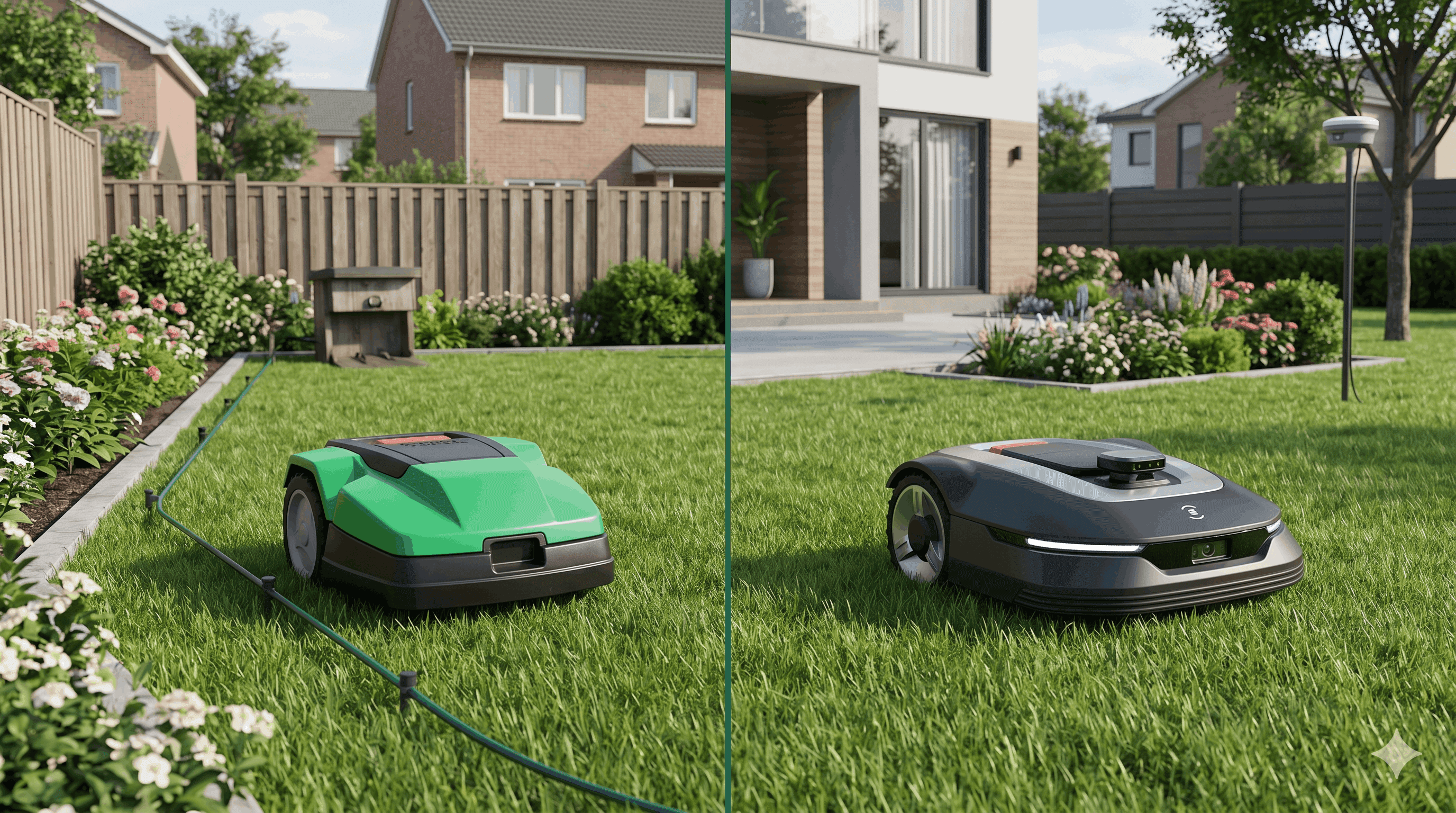
May 5, 2026
Replacing Your Boundary Wire Robot Mower with a Wire-Free Model: The Transition Guide
The installation took a full weekend and cost 200 euros. Three years later you have repaired the wire four times. Here is how to move to a wire-free model without repeating the same headache.
.png&w=3840&q=75)
May 3, 2026
Winterising and Maintenance: 5 Steps to Double the Lifespan of Your Robot Mower
Most robot mower failures do not happen during the mowing season. They happen after a bad winter storage. Here is how to avoid the most costly mistakes.