GPS vs. Boundary Wire Robot Mower: Which is the Best Choice?
By Alexandre
GPS vs. Boundary Wire Robot Mower: Which is the Best Choice?
The Great Automation Dilemma: Tradition vs. Innovation
You are about to automate your garden mowing, and one question divides all specialized forums: should you opt for the proven technology of the boundary wire or invest in the new generation of GPS/RTK wireless robots?
For two decades, the boundary wire has been the absolute standard. But in 2026, the price gap between the two technologies is narrowing, while homeowner expectations are rising. Buying a robot mower is a long-term investment (often 8 to 10 years). Making the wrong choice today can translate into hundreds of hours of manual maintenance or unforeseen repair costs.
In this comprehensive guide, we will examine the hidden costs, real performance, and reliability of each system to determine which is truly the most cost-effective for your terrain.
Wired Technology: The Choice of Apparent Economy
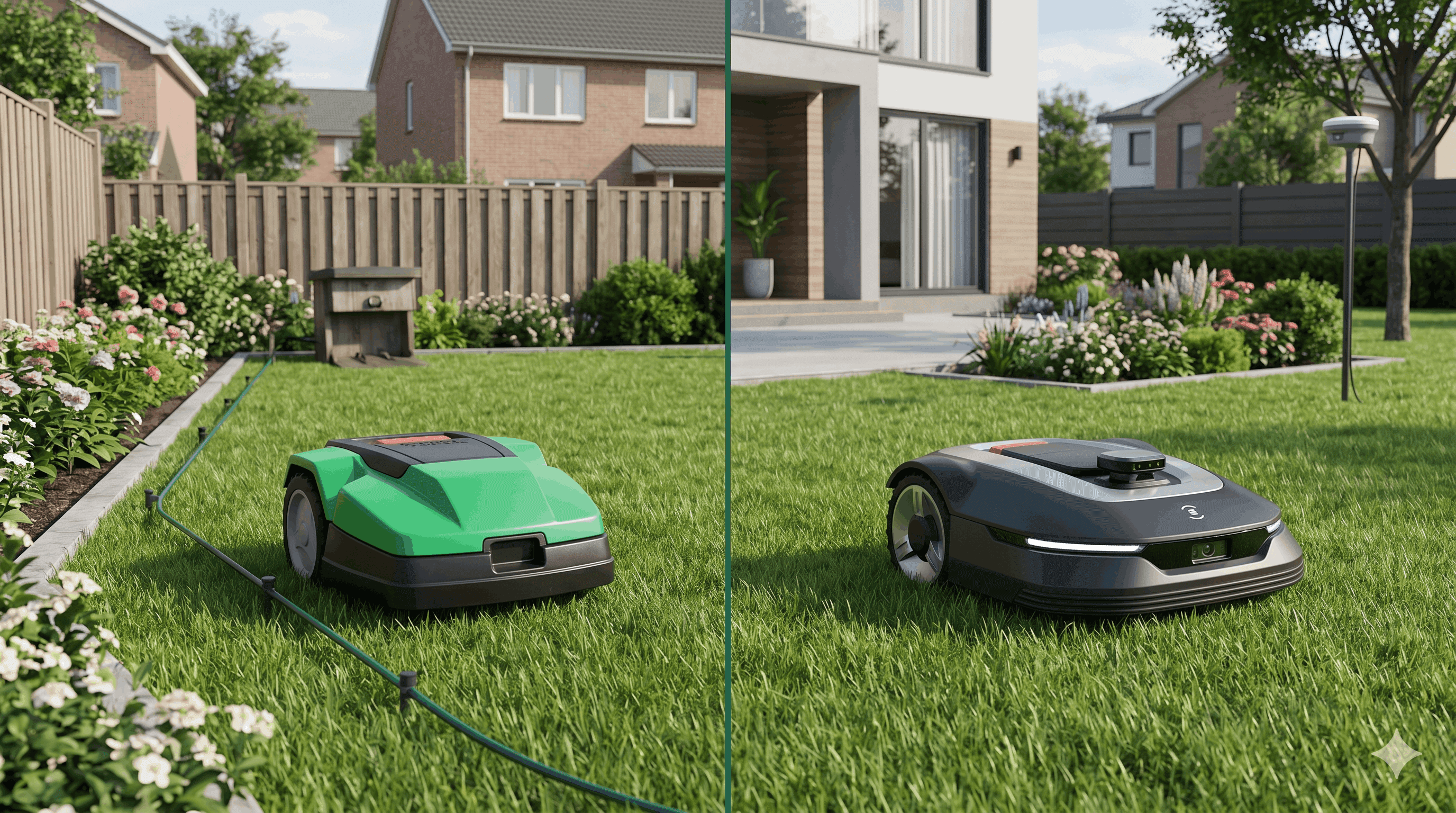
The robot with a boundary wire relies on a simple principle: a low-voltage electrical cable surrounds your lawn. The robot detects the electromagnetic field emitted by this wire and bounces off it to stay within its zone.
Advantages of the Wired System
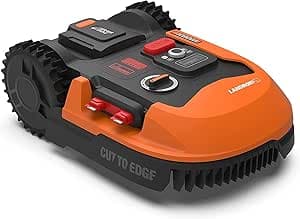
The main argument is, unsurprisingly, the initial price. For a 500 m² surface, a model like the Worx Landroid M500 Plus [cite: 1] or a Gardena Smart SILENO Life [cite: 1] is significantly more affordable than a GPS equivalent.
Another strength: insensitivity to aerial obstacles. The wire works everywhere, whether your garden is sunken between high walls or located under a canopy of trees. Where the satellite signal might weaken, the wire remains unperturbed.
Major Disadvantages: Fragility and Random Mode
The wire is a "chain": if it breaks at a single point, the entire system stops. Yet, the causes of rupture are numerous: rodents, spade strikes during Sunday gardening, or simple soil wear. Locating a break on 300 meters of buried cable is a frustrating experience that often requires the intervention of a professional equipped with a signal detector.
Moreover, the vast majority of wired robots use random navigation. The robot drives until it hits the wire, pivots at a random angle, and sets off again. Result? It may pass ten times in the same spot and forget a corner of the lawn for two days.
Wireless Technology (GPS/RTK/Vision): The End of Constraints
Wireless robots, like the Segway Navimow i105E [cite: 1] or the Dreame A1 Pro [cite: 1], use satellite signals (GPS/GNSS) corrected by a local base station (RTK) or AI-powered cameras to locate themselves within centimeters.
Why Wireless Dominates in Efficiency
Unlike wired models, these robots know their exact position. They practice systematic mowing. They cut your garden in perfect parallel lines.
Info: A systematic mowing robot is 2 to 3 times faster than a random robot to cover the same surface, which frees up your lawn faster for children or pets.
Flexible and Scalable Installation
Installation consists of "walking" the robot with a remote control to map the garden. If you create a new flower bed next month, simply modify the map on your smartphone in 30 seconds. With a wired robot, you would have to dig up the cable, cut it, and make new waterproof connections.
Comparative Cost Analysis over 5 Years
To truly compare these two technologies, one must look beyond the receipt and consider the total cost of ownership (TCO).
Economic Match: Wired vs. Wireless (500m2)
 | |
|---|---|
| Max area | 700 m² |
| Max slope | 35% |
| Wire-free | |
| GPS / RTK | |
| Cut-to-Edge | |
| App control | |
| Check price |
Hidden Costs of the Boundary Wire
- Installation Time: Allow 4 to 6 hours for a 500 m² plot compared to 30 minutes for a GPS robot.
- Installation Kit: Often sold separately (cables and pegs) for $55 to $165.
- Cable Maintenance: On average one break every 2 years requiring connectors or intervention.
- Power Consumption: The random robot running 3 times longer for the same result consumes more electricity and wears its components (motors and batteries) faster.
Which Model to Choose Based on Your Profile?
The Simple Urban Small Garden
If your land is less than 300 m², perfectly enclosed, and you have a tight budget, wired technology remains relevant.
The most economical solution for small areas of 300m2

Worx Landroid S300 (WR130E)
The smart choice for small gardens...
- Very compact, affordable, uses the universal Worx PowerShare 20V battery.
- Boundary wire installation required, no control display on the mower, strictly for very small yards.
Affiliate link. Same price for you.
Complex Terrain or Comfort Budget
For a surface of 500 m² to 1500 m², switching to wireless is almost always the best financial and psychological move. The Segway Navimow i105E [cite: 1] has revolutionized this segment by offering RTK + Vision technology at an extremely aggressive price.
Segway Navimow i105E
Pros
- Ultra-fast installation without cable
- Visual navigation to avoid obstacles
- Ultra-clean systematic mowing
Cons
- Requires a good view of the sky for the RTK base
- Price slightly higher than entry-level wired models
For larger or very steep terrains, the power of a wireless AWD (4-wheel drive) model becomes indispensable.
The power monster capable of climbing 80% slopes without any wire
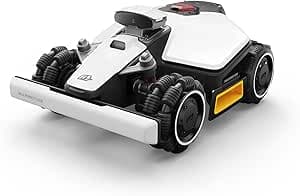
Mammotion LUBA Mini AWD 800
The compact off-roader...
- All-Wheel Drive (AWD) perfect for rough terrain
- handles slopes up to 80%
- aesthetic straight-line mowing.
- Bulky design
- the companion app can sometimes lack intuitiveness.
Affiliate link. Same price for you.
Decision Guide: The Quick Questionnaire
If you're still hesitating, follow this step-by-step guide to validate your choice.
Step-by-step guide
- 1
Step 1: Analyze your sky
Download a GPS test app on your smartphone. If you pick up fewer than 10 satellites in the middle of your garden, a wired model or a pure visual navigation model like the Landroid Vision will be preferable.
- 2
Step 2: Evaluate your gardening projects
If you plan to redo your flowerbeds or dig a pool within 2 years, absolutely avoid the boundary wire or you'll have to redo everything.
- 3
Step 3: Calculate your occupancy rate
If you want your lawn free all weekend, opt for the systematic mowing of wireless models that finish the job in record time.
Reliability and Maintenance: The Rematch
A concern often expressed is the lifespan of the complex electronics in GPS robots. Yet, reality shows that often the opposite occurs.
A robot like the Husqvarna 315 Mark II [cite: 1] is a machine of legendary reliability, but it will spend much more time on the field due to its random mode. The motor bearings and battery are stressed much more heavily than a model like the Anthbot Genie1000 [cite: 1] which, thanks to its LiDAR, optimizes every meter traveled.
Warning: A robot that runs 12h a day will wear out mechanically twice as fast as an intelligent robot doing the same job in 4h.
Frequently Asked Questions (FAQ)
Frequently Asked Questions
Is the GPS signal paid?
Can I install a wireless robot under large trees?
Is the boundary wire more secure against theft?
Can we mix both technologies?
Conclusion: Is Wireless Truly the Future?
For 90% of users in 2026, the benefit of wireless far justifies the initial extra cost. The time saved during installation, the definitive disappearance of cut cable problems, and the speed of systematic mowing offer incomparable ease of use.
The boundary wire remains a relevant niche solution for very small budgets or "well" gardens completely deprived of satellite signal. But if your budget allows, don't make the mistake of choosing an end-of-life technology.
Are you ready to go wireless or do you still fear the dark zones of your garden? Tell us in the comments, we'll help you check your satellite coverage!
Make the right budgetary choice
Our simulator compares the purchase price and maintenance costs over 5 years to help you decide between wire and GPS
Read also
.png&w=3840&q=75)
May 19, 2026
Small Urban Gardens: Which Wire-Free Robot Mower to Choose in 2026?
High walls, narrow paths, and a patio taking up half the garden. Urban lawns are the hardest terrain for robot mowers. Here is which navigation technology actually works when the sky is blocked.
May 5, 2026
Replacing Your Boundary Wire Robot Mower with a Wire-Free Model: The Transition Guide
The installation took a full weekend and cost 200 euros. Three years later you have repaired the wire four times. Here is how to move to a wire-free model without repeating the same headache.
.png&w=3840&q=75)
May 3, 2026
Winterising and Maintenance: 5 Steps to Double the Lifespan of Your Robot Mower
Most robot mower failures do not happen during the mowing season. They happen after a bad winter storage. Here is how to avoid the most costly mistakes.