Hedgehogs and Pets: Are Robot Lawn Mowers Safe in 2026?
By Le Coin Vert
.png&w=3840&q=75)
For years, manufacturers of bump-sensor robot mowers presented animal safety as a solved problem. The robot hits an obstacle, stops, changes direction. The issue is that a hedgehog cannot move fast enough to clear the path of a blade spinning at 3000 RPM after a contact sensor triggers the stop command. The mechanical response delay is in the order of milliseconds. The physiological reaction time of an animal sleeping under dead leaves is in the order of seconds. UK veterinary statistics estimate that several thousand hedgehogs are injured or killed each year by bump-sensor robot mowers across Europe.
That is not a marginal criticism. It is a fundamental design failure that optical, ultrasonic, and vision sensors have since corrected.
The Technology That Makes the Difference
A bump-sensor robot mower detects an obstacle when it touches it. An ultrasonic sensor robot detects objects at 10 to 30 cm and slows before contact. A Vision or LiDAR robot identifies obstacles at 50 cm to 1 m and routes around them without ever approaching.
For animals, detection distance is the variable that matters. A hedgehog curled on a lawn is invisible to a bump sensor. It can be invisible to ultrasound if its profile is too low. It is perfectly visible to a 360-degree LiDAR sensor or a vision camera.
Dreame's vision-equipped models classify detected objects into distinct categories: animal, human, static object. Each category triggers a different response behaviour. An animal detection triggers an immediate stop and a wide deviation, rather than a simple few-degree reorientation. That is a qualitative difference, not just a quantitative one.
Vision navigation with real-time animal classification — the most reliable choice for gardens with wildlife
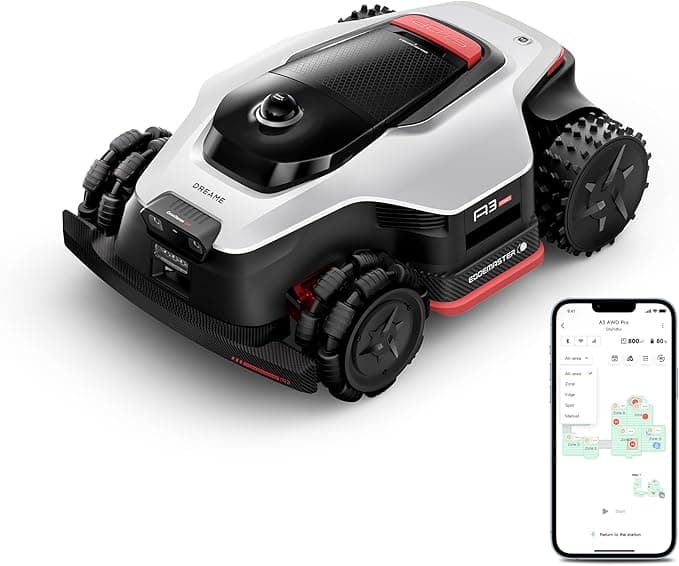
DREAME A3 AWD Pro 3500
The off-road reference for 5000m². 4-wheel drive, climbs trees (almost, 80% slope) and 3D vision.
Affiliate link. Same price for you.
Mowing Hours: The Most Underrated Variable
The majority of hedgehog accidents happen between 9 PM and 2 AM, the hours when hedgehogs are active and when many owners schedule their robot to avoid daytime noise.
The immediate, zero-cost solution is to reschedule mowing sessions to daylight hours, between 10 AM and 8 PM. Hedgehogs are nocturnal. During the day, they sleep in sheltered areas away from the lawn surface. Rescheduling to daylight hours reduces collision risk by 80 to 90 % regardless of the robot model's sensor technology.
For those who genuinely need night mowing (dense residential area, noise restrictions, excessive daytime heat), a Vision model is non-negotiable.
Never schedule your robot mower between 9 PM and 6 AM if your garden is accessible to hedgehogs. This time window accounts for 80% of documented animal accidents.
Dogs, Cats and Children: The Other Cases
An average-sized adult dog presents little risk with any model: its mass triggers contact sensors well before the blades reach a critical height. A kitten under three months old, however, can pass under some robots' chassis without triggering the contact sensor if its body profile is too small.
Adult cats tend to avoid moving robots by instinct. The real risk is a cat sleeping in long grass, invisible to any non-optical sensor.
For gardens used by children, Vision models with "human" category detection are recommended. Most premium 2026 models stop blades and forward motion immediately when a human-sized object is detected within 50 cm.
Which robot is compatible with your animals?
Our simulator filters models based on your specific situation.
Top Pet-Safe Robot Mowers 2026
Top Pet-Safe Robot Mowers 2026
|  |  | |
|---|---|---|---|
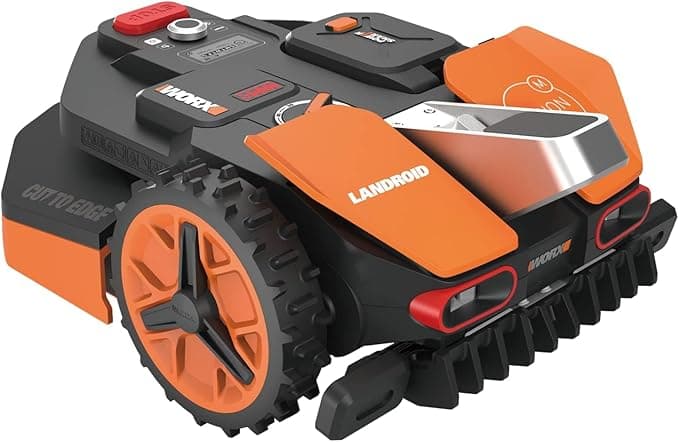
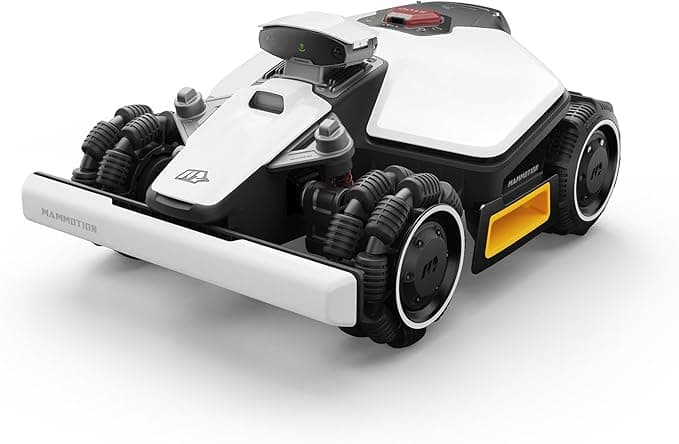
| Max area | 3500 m² | 800 m² | 1500 m² |
| Max slope | 80% | 30% | 80% |
| Wire-free | |||
| GPS / RTK | |||
| Cut-to-Edge | |||
| App control | |||
| Check price | Check price | Check price |
The Dreame A3 AWD Pro 3500 is the only model on the market that explicitly classifies animals in its detection system and adapts avoidance behaviour accordingly. For a garden with active cats or hedgehogs, it is the most reliable option.
The Worx Landroid Vision M800 uses a vision camera for distance obstacle detection and suits medium gardens up to 800 m². Its optical detection identifies low-profile obstacles that ultrasonic sensors routinely miss.
The Mammotion Luba Mini AWD 1500 navigates by LiDAR with 360-degree perimeter detection. LiDAR does not classify object types, but its early long-range detection leaves sufficient margin to route around slow-moving animals.
Animal Safety by Technology Type
Pros
- Vision: real-time animal category classification
- LiDAR: early detection at 50-100 cm distance
- Rescheduling to daylight hours: immediate risk reduction at zero cost
- Combined sensors on premium hybrid models
Cons
- Bump sensors: mechanical reaction too slow for small animals
- Night mowing: elevated risk even with good technology
- LiDAR without Vision: no object category classification
- Premium cost for Vision models with category detection
Frequently Asked Questions
Can a robot lawn mower injure a hedgehog?
What mowing hours are safest for hedgehogs?
Can my dog stay in the garden while the robot mows?
Read also
.png&w=3840&q=75)
May 19, 2026
Small Urban Gardens: Which Wire-Free Robot Mower to Choose in 2026?
High walls, narrow paths, and a patio taking up half the garden. Urban lawns are the hardest terrain for robot mowers. Here is which navigation technology actually works when the sky is blocked.
May 5, 2026
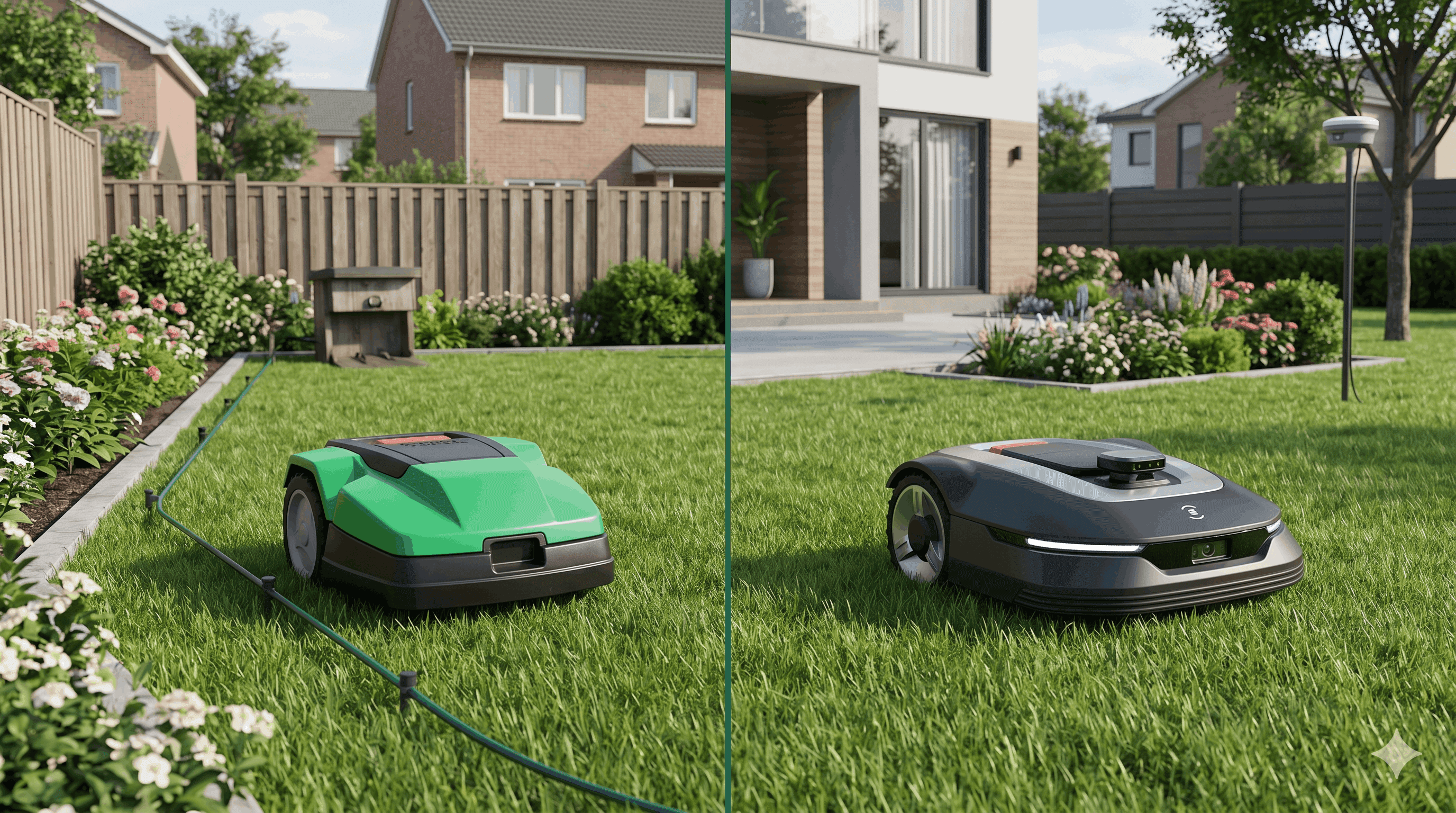
Replacing Your Boundary Wire Robot Mower with a Wire-Free Model: The Transition Guide
The installation took a full weekend and cost 200 euros. Three years later you have repaired the wire four times. Here is how to move to a wire-free model without repeating the same headache.
.png&w=3840&q=75)
May 3, 2026
Winterising and Maintenance: 5 Steps to Double the Lifespan of Your Robot Mower
Most robot mower failures do not happen during the mowing season. They happen after a bad winter storage. Here is how to avoid the most costly mistakes.